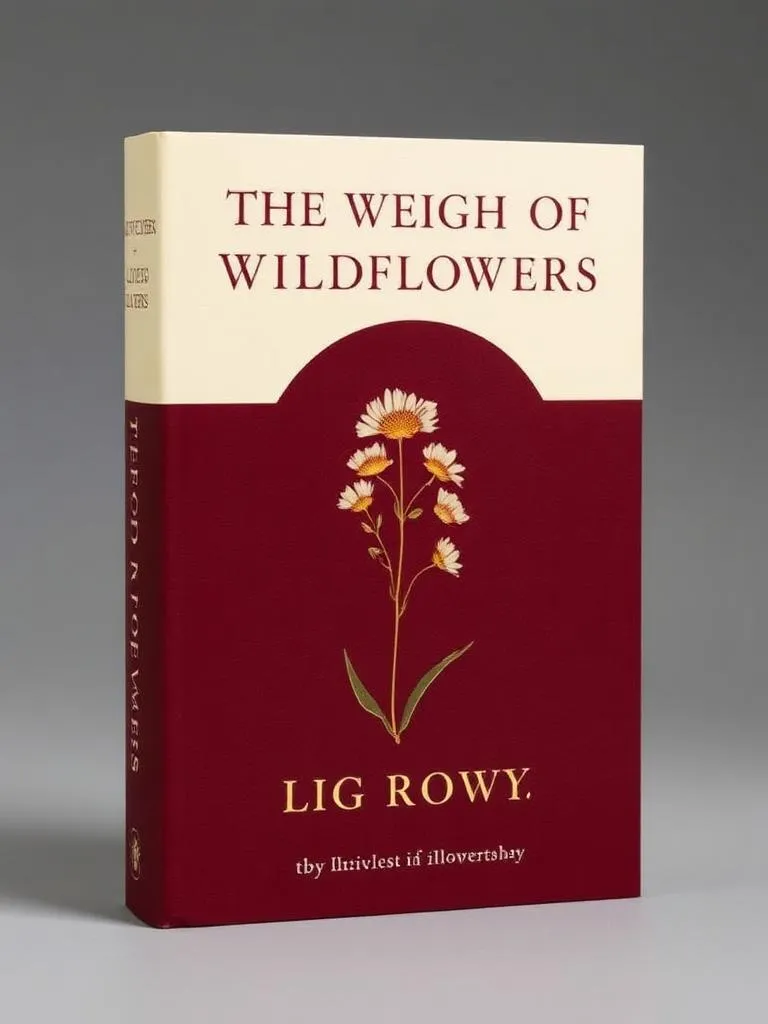
Set against the backdrop of a rapidly changing twentieth century, The Weight of Wildflowers is a richly researched and emotionally resonant historical novel that explores memory, legacy, and the overlooked contributions of women to science and history. Beginning in 1914, the story follows Cecily Aldworth, one of the first women admitted to the prestigious herbarium at Kew Gardens, where she dedicates herself to the meticulous study and preservation of plant life.
For Cecily, the herbarium represents more than a place of work. It is a sanctuary where curiosity and intellect can flourish in a society that often limits women’s ambitions. Surrounded by shelves of carefully preserved specimens collected from around the world, she finds purpose in documenting the natural world and contributing to scientific knowledge. Yet as Europe is transformed by war and social upheaval, the opportunities available to women begin to shift in unexpected ways.
By 1919, the optimism that once accompanied her groundbreaking admission has faded. Institutional changes, returning soldiers, and deeply rooted prejudices gradually push women like Cecily to the margins. Despite her dedication and expertise, her achievements are overlooked, her research is attributed to others, and her name slowly disappears from official records. Like the pressed flowers she carefully catalogues, her life becomes preserved yet hidden, significant yet largely unseen.
The novel unfolds across two timelines. A century later, Cecily’s granddaughter, Eleanor, discovers a long-sealed box tucked away in the attic of a family home. Inside are notebooks, sketches, pressed botanical specimens, and personal letters that reveal a remarkable story long buried by time. As Eleanor pieces together her grandmother’s forgotten life, she begins to understand not only the sacrifices Cecily made but also the lasting impact of her work.
Through alternating perspectives, the novel examines the relationship between past and present, exploring how family histories can be lost, rediscovered, and reinterpreted. Themes of recognition, resilience, scientific curiosity, and female achievement are woven seamlessly into a narrative that is both intimate and sweeping. The natural world serves as a powerful metaphor throughout, reflecting the fragile yet enduring nature of memory itself.
With exquisite prose and vivid historical detail, The Weight of Wildflowers brings to life the hidden stories of women whose contributions were often excluded from the historical record. It celebrates those who worked quietly behind the scenes while questioning who gets remembered and who gets forgotten.
Winner of the Walter Scott Prize for Historical Fiction, the novel has been praised for its elegance, emotional depth, and masterful storytelling. Thoughtful, moving, and beautifully crafted, The Weight of Wildflowers is a tribute to the lives that history overlooks and the generations who uncover them again, proving that even the most fragile stories can leave a lasting mark on the world.