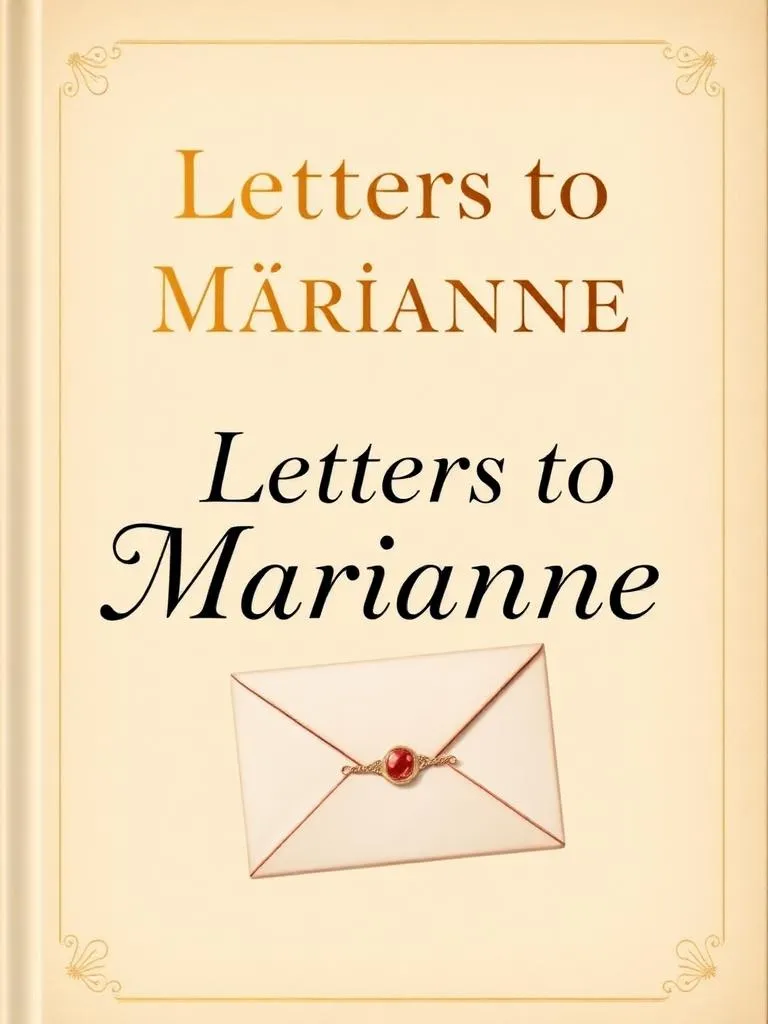
Spanning more than five decades, from the harsh post-war winters of 1947 to the rapidly changing digital world of 2003, Letters to Marianne is a poignant and deeply moving novel about friendship, memory, and the enduring connections that shape our lives. Written entirely through letters, postcards, journal fragments, and a single recovered telegram, the novel offers an intimate glimpse into the lives of two women whose bond survives despite time, distance, and the many circumstances that keep them apart.
The story begins during a transformative summer when Marianne and Clara are nineteen years old. In the brief space of a few months, they form a friendship marked by intellectual curiosity, shared dreams, and an unspoken understanding that neither has experienced before. Yet as the summer ends, life pulls them in different directions. Family obligations, careers, marriages, and unexpected hardships create a separation that neither woman fully anticipated.
Although they never truly reunite in person, their relationship continues through decades of correspondence. Through handwritten letters exchanged across cities and countries, readers witness the unfolding of two remarkable lives. Their messages capture moments of joy, disappointment, hope, grief, and resilience, revealing how friendship can evolve even when shared experiences become increasingly rare.
As the years pass, the world around them changes dramatically. The novel quietly chronicles major social and cultural shifts through the lens of personal communication, showing how historical events intersect with private lives. Each letter becomes a time capsule, preserving emotions and memories that might otherwise be lost. The contrast between the thoughtful pace of handwritten correspondence and the accelerating speed of modern communication forms one of the novel’s most compelling themes.
At its heart, Letters to Marianne is a meditation on absence and presence, examining what remains when opportunities are missed and words go unsaid. It explores the ways people continue to influence one another across distance, and how relationships can endure despite the passing of years. The narrative’s restraint is one of its greatest strengths, allowing emotion to emerge naturally through the characters’ own voices rather than dramatic events.
Praised for its elegance, emotional depth, and innovative structure, the novel was shortlisted for the Costa Novel Award and has been celebrated by critics for its ability to capture the quiet complexities of human connection. Both intimate and expansive, Letters to Marianne reminds readers that some friendships leave an imprint that time cannot erase.
Beautifully written and deeply affecting, this novel is a testament to loyalty, memory, and the enduring power of words shared across a lifetime.